
Why Does Family Life Feel Like One Endless To-Do List? The Simple Self-Care Shift That Changes Everything
When family life becomes a constant cycle of tasks, appointments, and responsibilities, it can start feeling like one endless to-do list. Learn why this happens, what quietly disappears along the way, and how saying yes to yourself can help bring more joy, growth, adventure, and connection back into everyday family life.
Why Do I Feel Like I'm Never Doing Enough? A Different Way to Measure Success as a Parent
Do you ever end the day feeling like you should have done more, even after giving everything you had? Many parents struggle with guilt, self-doubt, and the feeling that they're falling short. Discover a healthier way to measure success, practical ways to care for yourself, and why saying yes to yourself may be one of the best things you can do for your family.
Why Do I Never Have Time for Myself? Small Ways Parents Can Start Saying Yes Again
Do you ever reach the end of the day and realize every minute went to someone else? Many parents feel like there is never enough time for themselves, no matter how hard they work. Learn why this happens and discover small, practical ways to rebuild energy, create space, and start saying yes to yourself again, one step at a time.
Why Do I Feel Disconnected From My Family? The Hidden Cost of Never Saying Yes to Yourself
Feeling disconnected from your family can be confusing and painful, especially when you're spending every day caring for the people you love. Learn why emotional disconnection often begins with losing connection to yourself and how small acts of saying yes to yourself can help rebuild stronger family relationships.
Why Do I Keep Yelling at My Kids? The Hidden Link Between Parent Overwhelm and Losing Patience
Why do loving parents lose their patience and yell at their kids? Discover the connection between parent overwhelm, emotional exhaustion, and constantly putting yourself last—and learn how small acts of self-care can help you respond with more calm, patience, and connection.
Why Am I So Tired All the Time as a Parent? (Even When I Didn't Do Much Today)
Feeling exhausted even on days when you didn't seem to do much? You're not alone. Learn how the mental load of parenting, emotional exhaustion, and parent burnout contribute to fatigue, and discover how one small yes can help you begin restoring your energy.
20 Small Yes Ideas for Overwhelmed Parents
Some days even basic self-care feels too big. These small “yes” ideas are simple, manageable ways for overwhelmed parents to pause, reset, and start again.
Why Rest Feels So Hard for Parents (Even When We Need It Most)
Sometimes rest feels impossible, even when we desperately need it. This is why rest feels so hard for parents, and how to begin without guilt.
What Counts as a Yes? (Simple Ways to Start Your Yes Day)
A “yes” doesn’t have to be big or productive. If you’re feeling overwhelmed, this guide shows what actually counts—and how to start with something small and manageable.
The 5-Minute Yes That Can Change Your Day (A Simple Reset When You Feel Overwhelmed)
Some days you don’t need a full reset, you just need five minutes. This simple 5-minute reset can help you start again without pressure.
When You’re Too Tired to Even Start (Try This Instead)
Some days it’s not about being busy, it’s about having nothing left. If everything feels like too much, this simple 2-minute reset can help you take one small step without pressure.

Why You Feel Drained Even When You Didn’t Do Much
Ever have a day where you didn’t do much, but still felt completely drained? It might not be about what you did, but what you didn’t give yourself. Here’s why that happens, and how one small daily “yes” can start to change it.
After-Dinner Walk Benefits: A Simple Way to Feel Better When Everything Feels Off
If everything feels off, taking a short walk after dinner is one of the simplest ways to feel better. This post explains why walking helps your body and mind, and how to start with something small, even on busy days.

Why I Change Myself Around Others: A Your Yes Day Practice for Belonging Without Disappearing
Many of us change ourselves around others not because we’re insecure, but because belonging matters. This Your Yes Day reflection explores why adapting can feel necessary, and how to stay connected to yourself without disappearing.
When Everything Feels Urgent: Saying Yes to One Small Thing
When everything feels urgent and the mental load of parenting stacks up, it’s easy to lose yourself in the volume of small tasks. Inside Your Yes Day, we practice saying yes to one steady thing, a gentle reset that helps overwhelmed parents anchor before doing more.

How Your Yes Day Supports Parent Capacity and Reduces Guilt
There was a season when we ended most nights replaying every moment we wished we had handled differently. It wasn’t that we didn’t care, it was that our tank was empty.
We weren’t showing up with the patience we hoped for.
We weren’t showing up with the calm we wanted.
And we weren’t showing up for ourselves at all.
The guilt wasn’t because of our child.
It was because of our capacity.
And the moment we realized that, something shifted.
Travel With Kids Feels Overwhelming: How Saying “Yes” to Yourself Makes Family Trips Easier
We still remember sitting in the car, bags packed for what was supposed to be a simple weekend trip. Our son was in the back, humming to himself, kicking his little feet against the seat like he always does when he’s excited. And the truth?
We weren’t excited.
We were exhausted.
It wasn’t him. It was us.
We were tired before the trip even began, mentally stretched thin, running on fumes, emotionally disconnected from the version of ourselves we thought parenting would feel like. Travel, something we used to love, suddenly felt like one more thing to manage instead of something to enjoy together.
That drive was the moment we realized:
Travel wasn’t overwhelming because of our child… it was overwhelming because we had nothing left to give.
Your Yes Day: Making Space for You So Your Home Doesn’t Run You
We remember the exact night it hit us.
It was one of those evenings when we were already running on fumes. Our son had dumped out his entire bin of Legos looking for one tiny piece, dinner dishes were still in the sink, and we kept stepping over laundry baskets just to get to the hallway. We looked around the living room and realized we were doing that thing we promised we would never do as parents, cleaning around the mess instead of dealing with it because we were just too overwhelmed to take on one more task.
We sat down on the couch, both exhausted, and for the first time we said the words out loud:
“We can’t keep living like this.”
It wasn’t that our home was dirty. It was the mental weight of constant clutter, the never-ending chores, the feeling that our house was deciding our schedule for us. Every day felt like we were behind, and we could feel the stress spilling into other parts of our life, our patience, our energy, and even the little moments we wanted to have with our son.
That was our light-bulb moment.
The problem wasn’t just the mess. The problem was that we had stopped saying yes to ourselves.
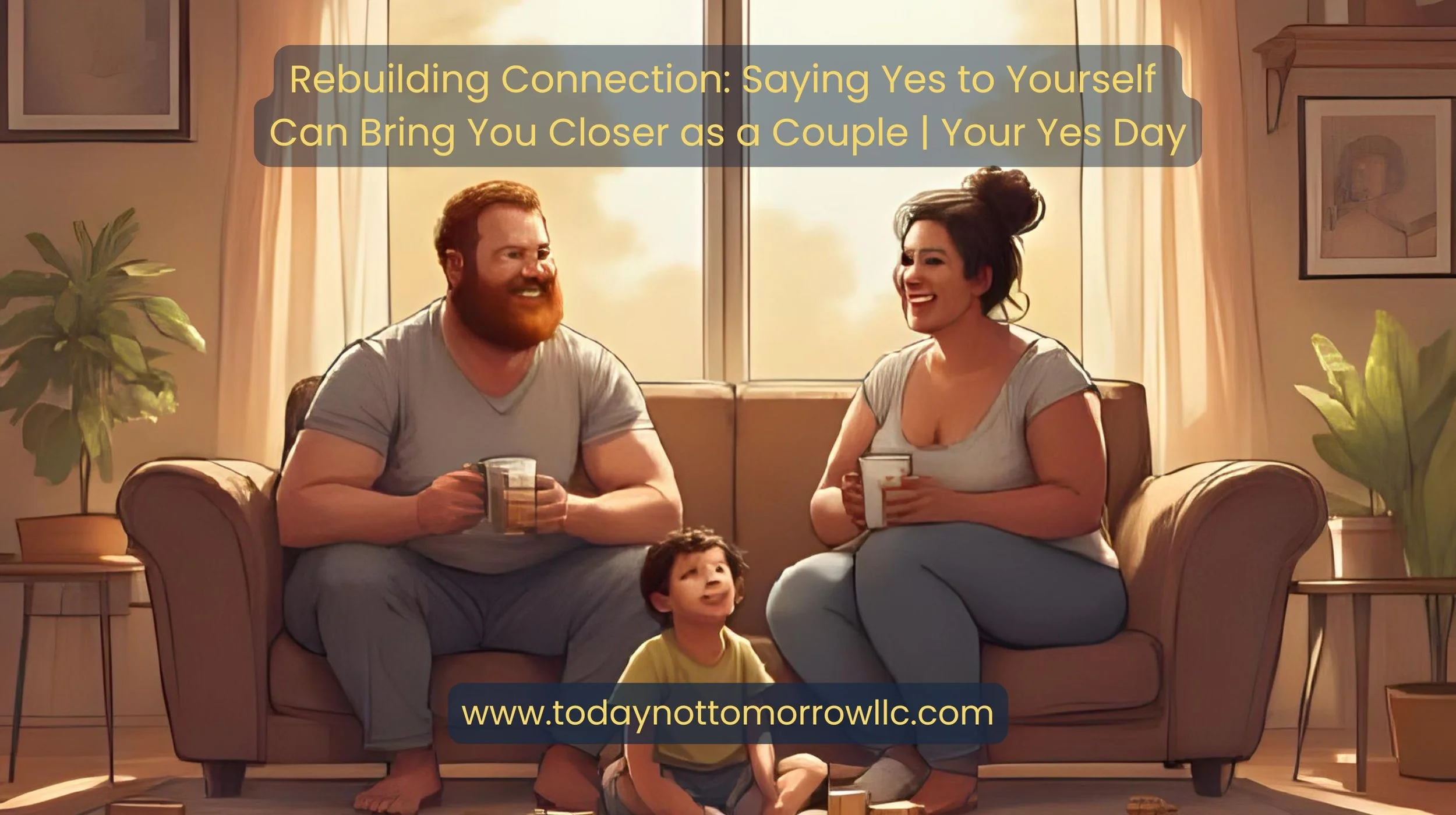
Saying Yes to Yourself Can Bring You Closer as a Couple | Your Yes Day
I remember the night it hit me.
We were both sitting on the couch after putting our son to bed, each lost in our own screen. The TV hummed in the background, our phones glowed in our hands, and the room felt… quiet. Not peaceful quiet, but the kind that makes you realize how far apart you’ve drifted.
I looked over at him, his red hair catching the blue light from the TV, and realized I couldn’t remember the last time we’d really connected. Not just talked about bills, schedules, or grocery lists, but talked. I couldn’t remember the last time I laughed so hard with him that my stomach hurt.
That realization hit like a light switch flipping on in the dark:
We were doing life side by side, but not together.
And it wasn’t because we didn’t love each other, it was because we were both running on empty. Between work, parenting, exhaustion, and expectations, we had stopped saying yes to ourselves.
And when you stop saying yes to yourself, you eventually stop having anything left to give to the people you love most.
That was the moment we knew something had to change.

Reconnecting with Your Child Starts with Saying Yes to Yourself
I remember the day it really hit me. I was standing in the kitchen, stirring dinner, half-listening as my son told me about something he built in Minecraft. I nodded, but I wasn’t really there. My mind was racing through my to-do list, the emails I hadn’t answered, the dishes in the sink. He stopped mid-sentence and said quietly, “Never mind, you’re busy.” That sentence cut deeper than I expected. It was like a light switch flipped on and I finally saw what had been happening. I wasn’t disconnected because I didn’t care—I was disconnected because I was exhausted.